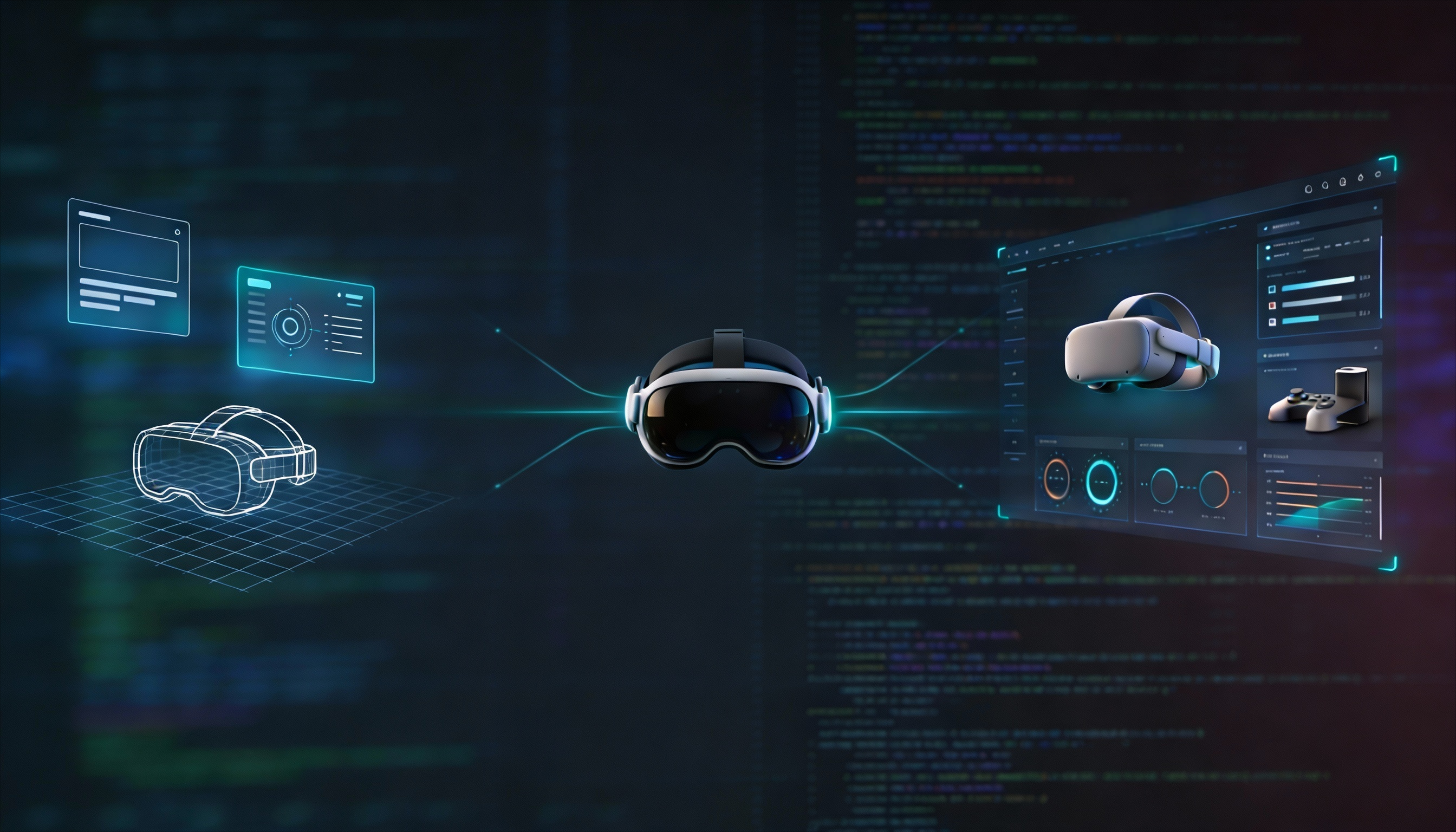
From Prototype to Production.
The Real Cost of Building an XR App
The Illusion of Progress
Building an XR prototype feels deceptively simple. A headset, a few interactions, a basic environment and suddenly the experience feels real. Stakeholders put on the device, walk around, interact with objects and nod in approval. It feels like you are almost ready to launch. This is the most dangerous phase of XR development, because the prototype creates a powerful illusion of completeness. In reality, you are only seeing the surface. Prototypes exist in controlled conditions. The lighting is perfect. The space is predictable. The user is patient. Performance issues are hidden because content is limited. Crashes are forgiven because it is “just a demo.” At this stage, the goal is not stability, scalability or retention. The goal is belief. And prototypes are excellent at creating belief.
The Prototype Is Not the Product
This is where most teams make their first strategic mistake. They assume that because something works once, it will work in the real world. But the prototype is not the product. It only proves that an idea can function under ideal circumstances. It does not prove that people will use it repeatedly, pay for it, or integrate it into their lives or workflows. The real cost of XR does not begin during development. It begins when you decide to move from controlled demos to unpredictable reality. Production is not about adding features. It is about removing fragility.
Reality Is Messy
The moment you expose your XR app to real users, the environment becomes hostile. Rooms are smaller than expected. Lighting changes constantly. Network connections fluctuate. Users move differently, press the wrong buttons, skip instructions, remove the headset early, or experience discomfort. Devices overheat. Batteries drain. Operating systems update without warning. Suddenly your beautifully crafted demo starts to reveal cracks. This is not because your team failed. This is because reality is chaotic. Production work is the process of making your product resilient to chaos.
Performance Is a Constant Battle
Performance optimization becomes your first major cost sink. XR has no tolerance for inefficiency. A slight drop in frame rate can cause nausea. Poor memory management crashes sessions. Heavy assets break immersion. Every new feature adds computational load. Optimizing lighting, shaders, physics, animations and assets becomes a continuous battle. This is not a one-time pass. Every update requires re-optimization. Many teams are shocked to discover that performance work alone can take as long as the original development phase. This is invisible work. Users never notice it directly, but they feel it instantly when it is missing.
Supporting Multiple Devices
Then comes device compatibility. Your prototype probably ran on a single headset in your office. Production means supporting multiple hardware versions, different controllers, varying refresh rates and platform restrictions. Each device behaves slightly differently. Inputs feel different. Tracking accuracy varies. System limitations change. Every new device multiplies your testing and engineering workload. Bugs appear only on specific hardware. Fixes on one device break another. This complexity is unavoidable if you want reach. Supporting multiple platforms is not a feature. It is a commitment.
Scaling Content Beyond the Demo
Content scalability is another silent cost. Early builds hard-code everything. Scenes are fixed. Assets are embedded. Interactions are rigid. This approach collapses the moment you want to update, expand or personalize experiences. Production requires content pipelines, asset management systems, update mechanisms and version control. You need to think like a platform, not a demo. None of this is visible to users, but without it, growth becomes impossible. Every new piece of content becomes a technical problem instead of a creative one.
Iteration Changes Everything
Real user testing changes everything. Internal teams behave politely. Real users do not. They miss UI cues. They misunderstand mechanics. They get tired faster than expected. They quit without explanation. Every testing round exposes assumptions you did not know you were making. This forces redesigns, flow changes and performance rework. Iteration is where timelines stretch and budgets grow. Not because teams are slow, but because good products are discovered through friction. Every iteration makes the product stronger, but also more expensive.
The Invisible Infrastructure Layer
Infrastructure quietly enters the picture. Production apps need analytics to understand behavior. Crash reporting to identify failures. Backend systems to manage data. Authentication to secure access. Storage to save progress. None of this feels exciting. None of it appears in marketing screenshots. But without it, you are blind. You cannot improve what you cannot measure. Infrastructure is not optional. It is the nervous system of your product.
Security Is Not Optional
As soon as real data enters the system, security becomes critical. Encryption, permission management, compliance requirements and audits start to matter. If you serve enterprises, this multiplies. These layers add cost and time, but skipping them is far more expensive. Trust, once lost, is impossible to rebuild. Security is not a feature. It is a foundation.
The Cost Everyone Ignores: Maintenance
XR products are not “build once and forget.” New OS updates break things. New hardware changes performance profiles. Users discover edge cases. Bugs emerge in unexpected ways. Content needs refreshing. UX needs improvement. Feedback demands change. Maintenance never ends. This is not a flaw of XR. This is the reality of all living products. The difference is that immersive systems are more fragile, so maintenance matters more.
Why Budgets Break
This is why budgets break. Founders budget for development. They rarely budget for iteration, optimization, QA cycles, maintenance and platform changes. When reality arrives, costs explode. Not because teams mismanaged money, but because they planned for a demo, not a product. They planned for launch, not longevity.
The Mindset Shift
The mindset difference is critical. A prototype proves possibility. Production proves sustainability. One exists in controlled environments. The other must survive real-world chaos. One impresses investors. The other earns user trust. This shift in thinking changes architecture, timelines and financial planning.
Questions Founders Should Ask Early
Instead of asking, “How fast can we build this?” ask “How will this scale?” “What happens after launch?” “How do we maintain it?” “What breaks first?” “What does success look like six months from now?” These questions reshape decisions. They force you to design systems instead of scenes. Products instead of demos.
Final Thoughts
Prototypes create excitement. Production creates responsibility. XR products do not fail because teams cannot build them. They fail because teams underestimate what it takes to sustain them. The prototype proves possibility. Production proves viability. If you are building in XR, do not plan only for launch. Plan for what comes after. That is where the real cost lives. And that is where real value is created.